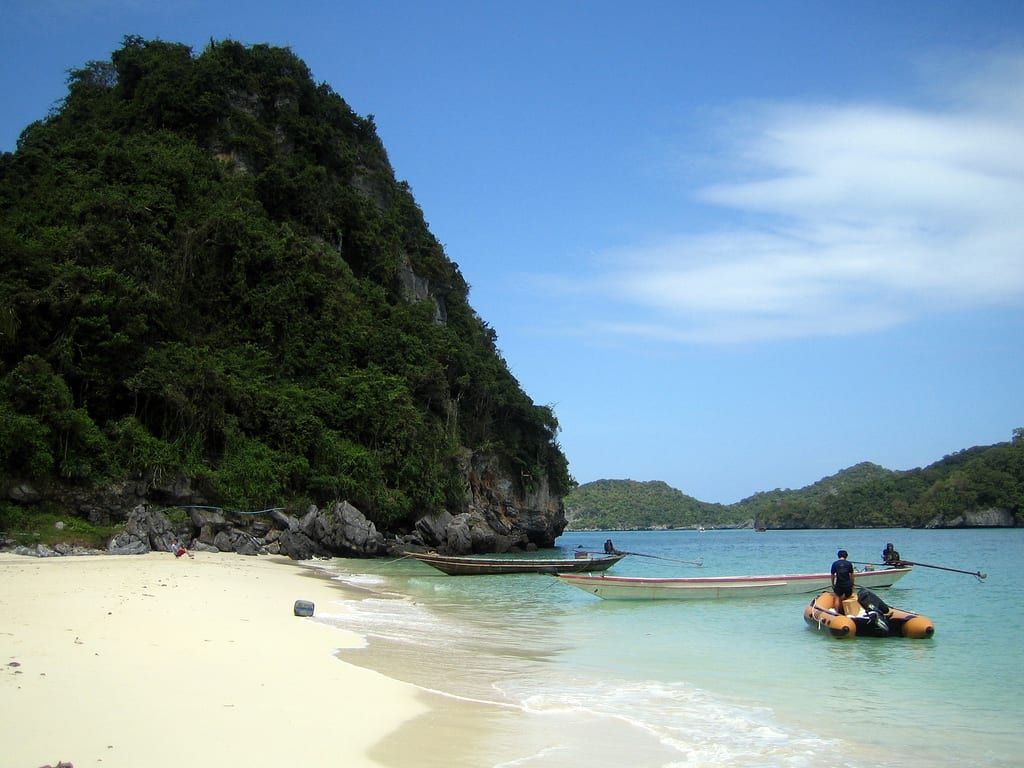
Forty-two jungle-topped limestone islands rise from the Gulf of Thailand, 28-30 km northwest of Koh Samui, and almost every visitor arrives on an organized boat tour. An Ang Thong day trip is the classic day out from both Koh Samui and Koh Phangan. It eats a full day, eight hours or more door to door, so it pays to know exactly what you're booking.
The short version: the karst scenery is exceptional, the snorkeling is weak, the park fee comes on top of your ticket, and the whole park shuts for roughly six weeks every monsoon. This guide covers the itinerary hour by hour, every boat type and price from both islands, how hard each stop is, and the timing that gives you the best day.
Ang Thong Day Trip at a Glance
Mu Ko Ang Thong means 'bowl of gold': 42 limestone islands spread across 102 km² of the Gulf of Thailand, protected since 12 November 1980 as one of Thailand's earliest marine parks. Less than a fifth of that area is land. The rest is shallow water, around 10 m deep on average, which is exactly why the snorkeling disappoints.
- Day length: 8+ hours, roughly 7:30 AM pickup to 5-6 PM drop-off
- Park fee: ฿300 adults, ฿150 children aged 3-14, in cash, almost never in the tour price
- Crossing: 45-60 minutes by speedboat, 90-120 minutes by big boat
- Standard stops: Koh Wao snorkeling, kayaking, Thale Nai lagoon, Wua Ta Lap viewpoint
- Season: open 8 AM-5 PM daily, closed roughly 1 November to 15 December
One structural fact shapes the whole day: there's no public ferry and no independent access. Getting to Ang Thong means a licensed tour or a private charter, so the boat you choose basically is the trip.
What Is Ang Thong National Marine Park?
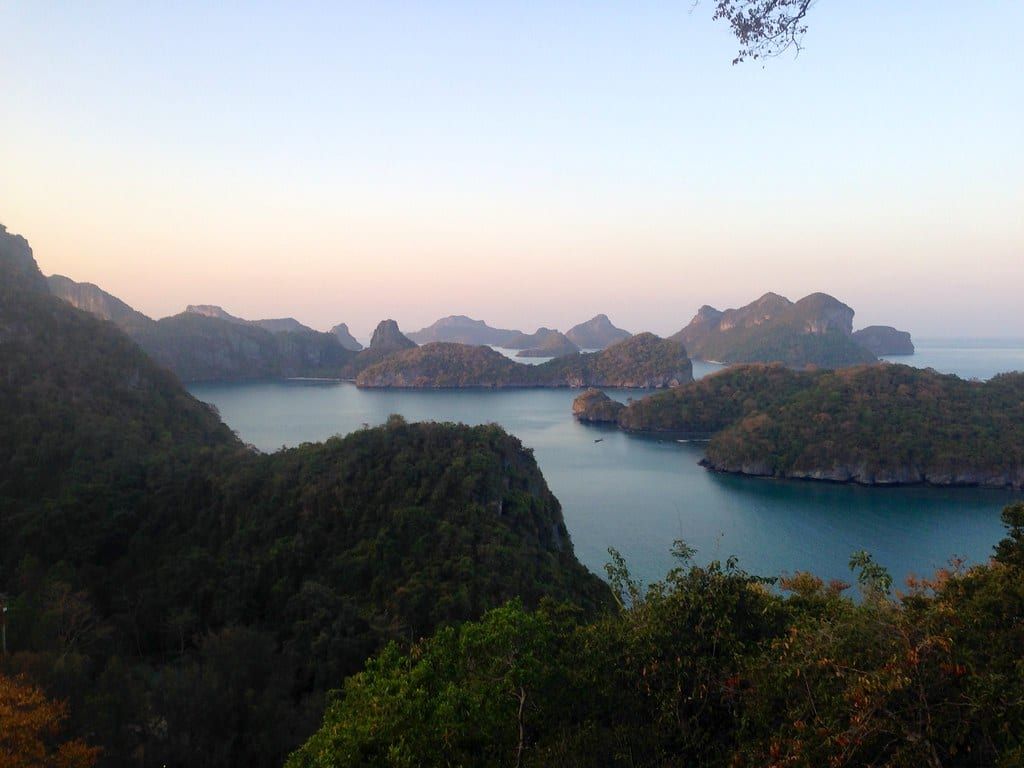
Think vertical limestone. The islands are karst — cliffs, caves and collapsed sinkholes under dense jungle — and the archipelago's highest point, 396 m, is on Ko Phaluai. Most islands are uninhabited; day-trippers only set foot on three, with park headquarters and the main beaches on Ko Wua Ta Lap. Hidden inside the karst on Ko Mae Ko sits Thale Nai, a jade-green saltwater lake connected to the sea through underwater caves. The scenery draws Halong Bay comparisons, with warmer water and far fewer boats.
Fame arrived with Alex Garland's 1996 novel The Beach, which drew on the archipelago; the film, though, shot its beach scenes on the Phi Phi Islands and its waterfall jump at Khao Yai. In 2002 the park became a Ramsar wetland of international importance, site no. 1184. It also shelters an orchid found nowhere else, the Ang Thong lady's slipper. The crowds followed the fame: 134,315 visitors in 2019, nearly all on day tours from Samui, Phangan or Tao.
Your Day Trip, Hour by Hour
Nearly every tour from either island runs the same skeleton. From Koh Samui, pickups start between 7:30 and 8:30 AM, with Chaweng and Lamai collected first since they sit furthest from the northern piers. You check in at Mae Nam or Nathon, grab the light breakfast operators put out, and board.
The crossing sets the day's pace: anywhere from 45 minutes to two hours depending on the boat. First stop is usually the snorkeling reef at Koh Wao, at the archipelago's northern end, where you get about 40 minutes in the water. Treat it as a warm-up swim.
Lunch is served on board, buffet-style or cooked to order, and included on nearly every tour. The early afternoon goes to kayaking in the sheltered channels between the islands.
The late afternoon stacks the two headline stops: the stair climb to the Thale Nai viewpoint on Ko Mae Ko, then Ko Wua Ta Lap, where you choose between the big viewpoint hike and the beach. The return crossing and hotel drop-off land between 5 and 6 PM.
Sailing cruises run the same stops on a later clock: one Samui yacht trip picked passengers up between 8:30 and 9:20 AM and had them back around 6 PM. A typical Koh Phangan day ran 8:30 AM pickup to 6:30 PM drop-off. Either way, clear your evening.
Choosing Your Tour (and What It Should Cost)
Three boat types compete for your booking, and the spread is wide: ฿1,200 to ฿3,900 per adult from Samui before extras. Day trips from Koh Samui break down like this.
| Boat | Adult / child | Crossing | Group size |
|---|---|---|---|
| Big boat | ฿1,200 / ฿800 | 90-120 min | 50-70 passengers |
| Small-group speedboat | ฿1,850 / ฿1,500 | 45-60 min | 20-30 passengers |
| Sailing cruise | ฿3,400 / ฿3,200 | about 1 hour | small, semi-private groups |
| Private speedboat charter | from ฿32,850 per boat | 45-60 min | up to 40, your own group |
So which boat? Families, older travelers and the seasickness-prone should take the big boat: slower, far more stable, and children from about five travel at the ฿800 child rate, with under-4s usually free. If you hate queuing or want maximum time in the park, a small-group speedboat tour covers the crossing in under an hour and puts you ahead of the big-boat crowds. Comfort and food matter most: sailing cruises and semi-private yachts, such as the Samui operator charging ฿3,900, leave later, feed you properly, and carry fewer people. For most travelers the speedboat is the sweet spot.
Koh Phangan works the same way. The park sits about 35 km offshore, the speedboat crossing runs 45-75 minutes, and full-day tours from Koh Phangan with kayaking cost around ฿1,900, plus the ฿300 fee collected at the boat. Koh Tao is a longer story: 55 km out, a 1.5-2 hour crossing each way, and only a handful of operators.
Check inclusions before you pay. Hotel pickup, breakfast, lunch, a guide and snorkel gear come standard almost everywhere. Kayaks are included on some boats and a ฿250 extra on others; drinks are nearly always extra. The park fee, ฿300 for adults and ฿150 for children aged 3-14, is almost never in the ticket price, and rangers collect it in cash, so bring small notes.
Book 7-14 days ahead between December and February, when boats fill; 2-3 days is enough the rest of the year. Treat rock-bottom prices as the warning they are — anything much below ฿1,200 usually means an unlicensed or overloaded boat. Buy from an operator you can hold to a refund, not from a beach tout.
The Stops That Matter (and How Hard They Really Are)
Four stops fill every standard itinerary, and the difficulty notes below matter more than the brochure copy: two of the four involve real climbs. A few tours add Bua Bok Cave, a 1 km walk from headquarters named for its lotus-shaped flowstone. For everything else in the archipelago, our guide to things to do in Ang Thong covers the rest.
The Wua Ta Lap Viewpoint Climb
The park's best view costs its hardest 500 metres. The trail climbs close to 400 vertical metres on steep, uneven steps, with ropes in places and a rock scramble near the top; the final stretch is unshaded. Fit hikers manage 25 minutes up. Most people need 30 to 45, and everyone sweats. Wear shoes with grip and carry water, and from the top you'll look down on dozens of jungle-topped islands scattered across turquoise water, the panorama every Ang Thong tour sells. About 30% of guests skip the climb and stay on the beach instead, and that's a reasonable call with small children, bad knees or a heart condition. The beach is a good plan B.
Thale Nai, the Emerald Lagoon
At Ko Mae Ko the whole boat walks about 20 minutes up stairs from the beach to a viewing deck over Thale Nai, a jade-green saltwater lake ringed by sheer limestone walls. The green is genuine. Swimming is strictly forbidden; the lagoon is protected. Take your photos from the platforms, then swim at the outer beach or off the boat instead.
Snorkeling at Koh Wao
Go in with low expectations and the stop is fun. The park's reefs are heavily damaged, and visibility runs 3-5 m on a good day, against 15-20 m around Koh Tao; sediment washing in from the Tapi River keeps the water hazy. You'll drift over shallow coral with small reef fish and, if you're lucky, a hawksbill turtle. If fish are the point of your holiday, book a Koh Tao and Nang Yuan day trip instead; at Ang Thong, the snorkel is the intermission.
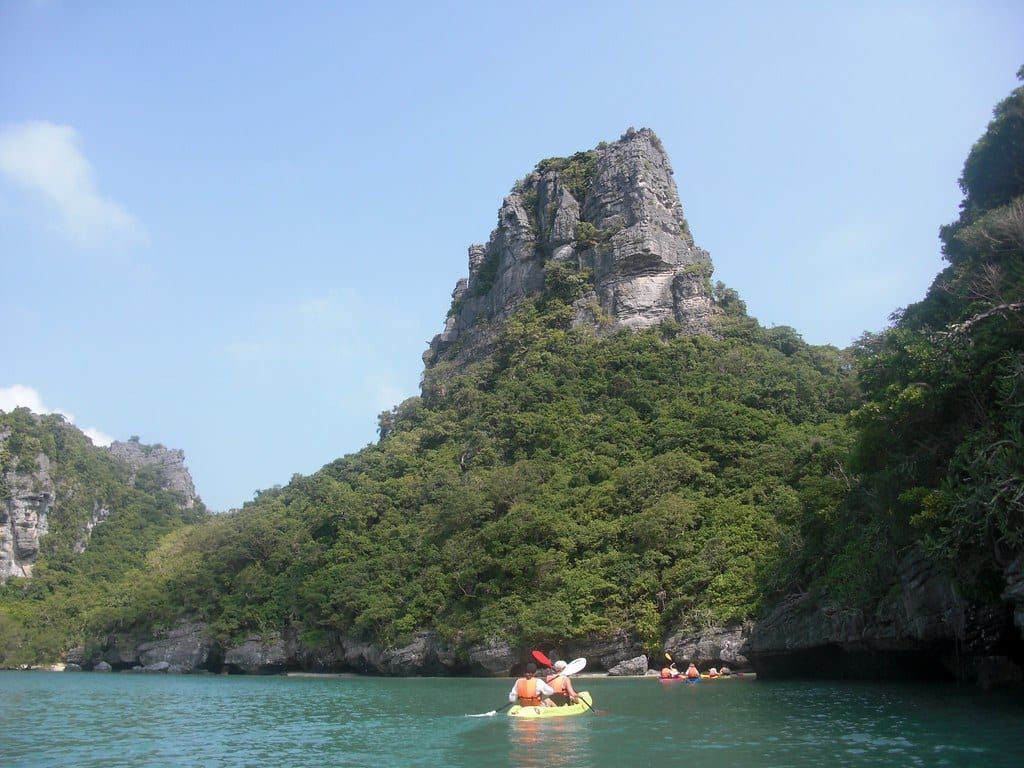
Kayaking the Limestone Channels
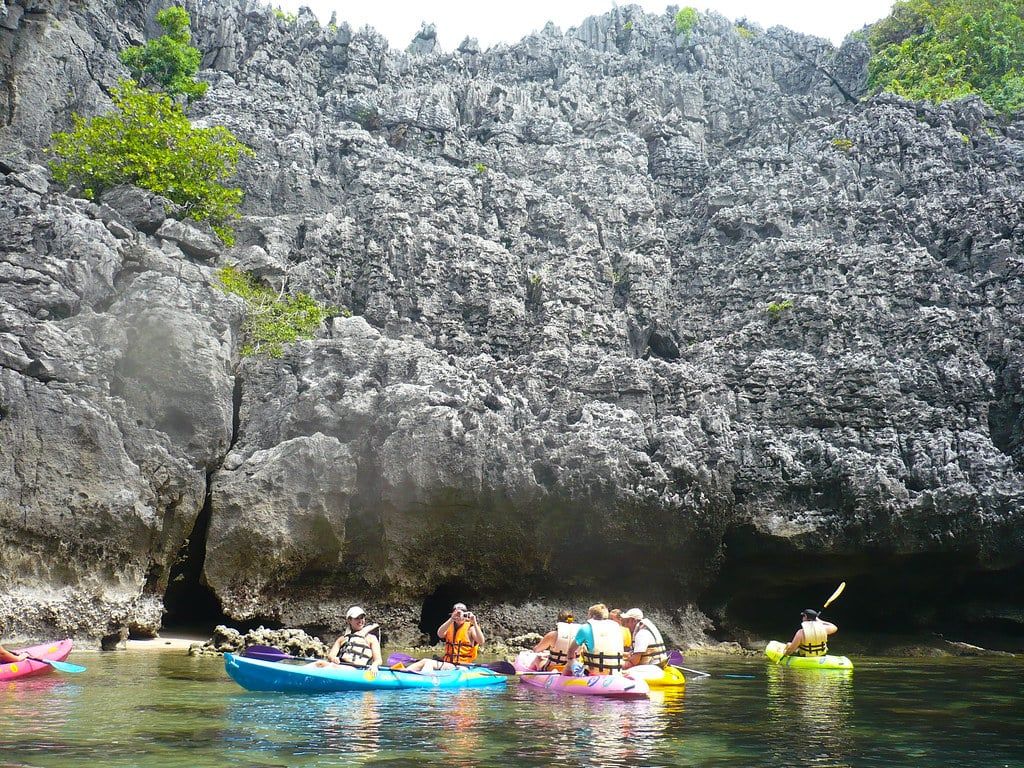
Kayaking is the stop that over-delivers. You get 45-60 minutes in stable sit-on-top doubles, paddling calm, sheltered channels between the karsts and into caves where the cliffs close in overhead. Children from four or five ride in doubles with an adult, and life jackets come in kid sizes. Some tours charge ฿250 extra for it. Worth paying. Our Ang Thong kayaking guide covers the routes in detail.
Beaches and Swimming, Honestly
Ko Wua Ta Lap has two white-sand beaches: one beside the visitor center, the other a 700 m forest walk to the island's west side. The catch is timing. The main beach sits in shade through the midday hours when most tours visit, so the practical swim usually happens off the boat or at the quieter outer beach. There's a single restaurant near the visitor center, open 8 AM-3 PM and again 6-8 PM, and no ATM anywhere in the park.
Best Time to Go — and When the Park Closes
January to April is the sweet spot: calm seas, clear skies and the year's best in-water visibility, with March and April the clearest months. December works too once the park reopens, usually between 10 and 20 December. Book ahead in this window; it's peak season.
May to September is a workable shoulder season, with reliable mornings, occasional afternoon showers and fewer boats. October turns rough — more rain, choppier crossings, more cancellations. From November to mid-December, don't plan anything: the park is shut.
The annual closure runs 1 November to 15 December in a typical year, but the dates move with the monsoon. Some seasons the park has closed from around 20 October and reopened nearer 20 December, so check Department of National Parks notices, or our page on opening hours and entry fees, before booking anything in that window.
When weather kills a trip, operators make the call early that morning, and the standard policy is a full refund or a free reschedule. For a sense of the thresholds: one operator cancels when waves exceed 1.2 m, winds top 25 knots, or lightning comes within 30 km. A cancelled day costs you nothing but the plan.
What to Pack (and How to Prepare)
Start the seasickness plan at breakfast, not at the pier. Take a motion-sickness tablet 45-60 minutes before pickup, eat light, and sit mid-boat where the roll is least. On rough days, roughly 20-30% of speedboat passengers feel queasy; if you know you're susceptible, the big boat's steadier crossing is the fix.
The packing list is short:
- Reef-safe mineral sunscreen, with no oxybenzone or octinoxate
- Swimsuit worn on the boat, plus a rash guard
- Strapped sandals or water shoes; flip-flops are dangerous on wet rock
- Dry bag or waterproof phone pouch
- Cash in small notes for the ฿300 fee; there's no ATM
- A towel, and 2 litres of water if you're climbing
Three park rules catch first-timers. Single-use plastics are banned, and rangers may make you leave bottles on the boat. Chemical sunscreens are discouraged to protect the reef, and bottles occasionally get checked coming ashore. Drones need prior written permission from the park authority.
Is the Ang Thong Day Trip Worth It?
Yes, if the day is about scenery. Forty-two karst islands, an inland emerald lagoon, a viewpoint that ranks among Thailand's best island panoramas and an hour of quiet paddling between cliffs: for photographers, kayakers and anyone who hasn't seen a karst archipelago before, this is one of the Gulf's better day trips.
Skip it if snorkeling is the priority — Koh Tao and Nang Yuan deliver 15-20 m visibility against Ang Thong's 3-5 — or if your group can't manage stairs and steep, rope-assisted trails; the park is listed as not wheelchair accessible. And go in with eyes open on crowds. The popular stops can feel as busy as Koh Samui itself, and queues form at the lagoon stairs whenever several big boats align.
Timing and boat choice blunt that. Later-departing yachts and small-group speedboats reach the lagoon and viewpoint after the big boats have moved on, one more argument for paying up. And if a day feels too short, stay over: basic bungalows on Ko Wua Ta Lap cost ฿600 a night for two, ฿1,500 for an eight-person unit, and camping runs ฿80 per person plus ฿450 for tent rental, all booked through the national park. The DNP's online reservation system has had long outages, so you may need to phone the park office on 077 286 588, ideally with a Thai speaker's help. After the day-trippers leave, the islands go quiet.
The verdict: go for the karst islands and the paddle, and let the reef be a bonus. Pick a December-to-April date, take the smallest boat your budget allows, wear real shoes, and treat the snorkel stop as a swim. Planned that way, Ang Thong earns its eight hours.
Frequently asked questions
How long is the boat ride from Koh Samui to Ang Thong?
The park lies 28-30 km northwest of Samui: about 45-60 minutes by speedboat and 90-120 minutes by big boat or sailing vessel. From Koh Phangan it's around 35 km, and speedboats run 45-75 minutes.
How much does an Ang Thong day trip cost?
Big-boat tours start around ฿1,200 per adult, small-group speedboats around ฿1,850, sailing cruises about ฿3,400 and semi-private yachts about ฿3,900; private charters start near ฿32,850 per boat. Add the ฿300 adult or ฿150 child park fee, usually paid in cash at the park.
Is the Ang Thong day trip worth it?
For scenery, yes: 42 limestone islands, the emerald lagoon, the Wua Ta Lap viewpoint and calm-water kayaking. For snorkeling, no. Reefs are damaged and visibility runs 3-5 m against 15-20 m at Koh Tao, so fish-focused travelers should pick a Koh Tao and Nang Yuan trip.
Can you swim in the Emerald Lagoon?
No. Thale Nai on Ko Mae Ko is protected and swimming is strictly forbidden. You view it from stairs and platforms about 20 minutes above the beach, and swim instead at the outer beaches or off the boat.
When is Ang Thong National Park closed?
Typically 1 November to 15 December each year for the monsoon, though the dates shift; some seasons the closure has run from about 20 October to 20 December. Check Department of National Parks notices before booking in that window.
Will I get seasick on the way to Ang Thong?
Possibly, on a choppy day: roughly 20-30% of speedboat passengers feel queasy in rough conditions. Take a tablet 45-60 minutes before pickup, eat a light breakfast, sit mid-boat, or choose the more stable big boat.
Is the Ang Thong day trip suitable for kids?
From about age five, yes. The big boat is the stable option, and kayaking works for children aged four and up in a double with an adult. The Wua Ta Lap viewpoint climb is too steep for young children, who can wait at the beach with a guide.
Can I fly a drone in Ang Thong National Marine Park?
Not without prior written permission from the Department of National Parks. Unauthorized flights risk fines up to ฿100,000, confiscation of the drone and possible criminal charges. Single-use plastics and oxybenzone sunscreens are also restricted.
How far in advance should I book the tour?
Book 7-14 days ahead from December to February, when boats fill; 2-3 days is enough in low season. Avoid beach touts and prices well below ฿1,200, which usually mean unlicensed or overloaded boats, and confirm the park fee and inclusions before paying.